Is Aspartame Bad for You? Health Canada & IARC
Aspartame is the sweetener behind most “diet” and “zero sugar” products — and after the World Health Organization’s 2023 announcements, it became one of the most confusingly reported ingredients on earth. Headlines said “possible carcinogen”; the same week, the same organization reaffirmed the existing daily intake limit. Both are true, and the apparent contradiction has a clean explanation. Here it is, in plain language, plus the practical part: where aspartame hides on Canadian labels and how to avoid it if that’s your call.
Prefer to simply avoid it? Tarlo’s artificial-sweeteners rule flags aspartame and its siblings on any scan, free — the guide below unpacks what the 2023 headlines actually said.
What aspartame is
Aspartame is a low-calorie artificial sweetener roughly 200 times sweeter than sugar, made from two amino acids (aspartic acid and phenylalanine). Because so little is needed, it adds virtually no calories. It’s been in use since the 1980s and is one of the most-studied food additives in existence. On labels it appears as “aspartame” in both English and French; internationally it’s E951.
One quirk worth knowing: aspartame breaks down under prolonged heat, so it’s mostly in drinks and cold or shelf-stable products, not baked goods — which is why the “diet” versions of baked items usually use different sweeteners.
Where it shows up
The classic carriers: diet and zero-sugar soft drinks, sugar-free gum, “light” yogurts, drink crystals and water enhancers, sugar-free candies and mints, some protein products, and tabletop sweetener packets (Equal is aspartame-based). It also appears in some chewable vitamins and medicine syrups.
The label trap: “zero sugar” is not “unsweetened.” A product can honestly display zero on the sugars line — and carry no “high in sugars” front-of-package symbol — precisely because it’s sweetened with aspartame instead. If sweeteners are what you’re avoiding, the sugar numbers won’t warn you; only the ingredient list will.
The 2023 IARC decision, decoded
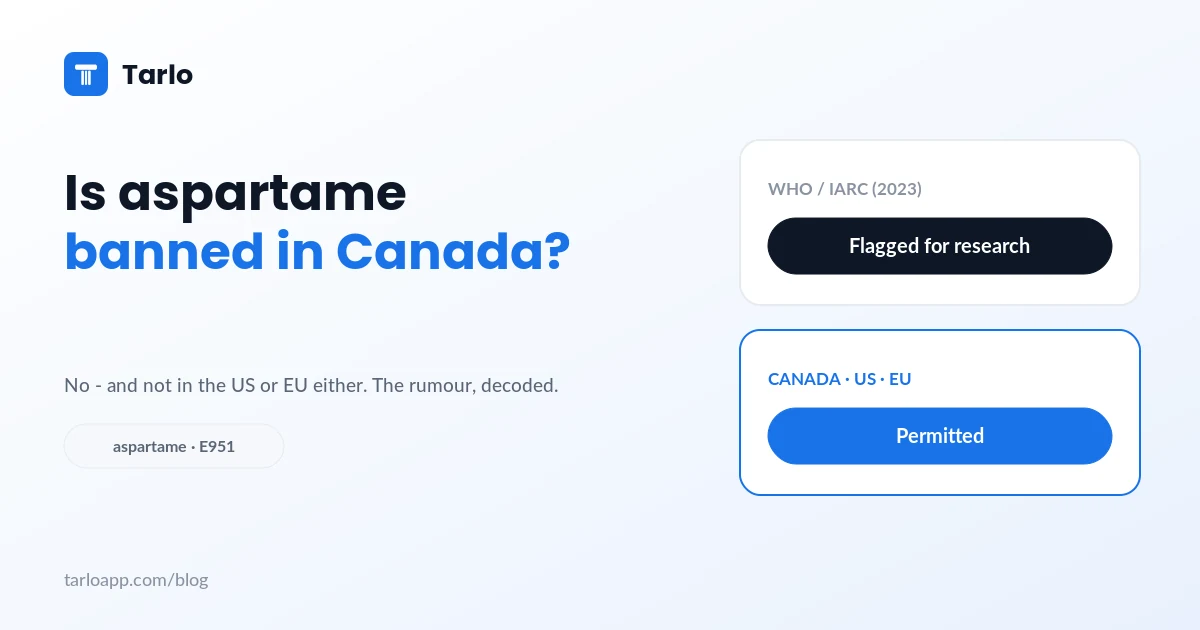
In July 2023 two different WHO-linked bodies spoke at once, and the distinction between them is the entire story:
- IARC (the WHO’s cancer-research agency) classified aspartame as “possibly carcinogenic to humans” — Group 2B. IARC assesses hazard: could this cause cancer under some circumstances, at some dose? Group 2B is its lowest positive rung, used when evidence is limited — the category also contains things like aloe vera extract and pickled Asian vegetables. It is explicitly not a statement about risk at real-world doses.
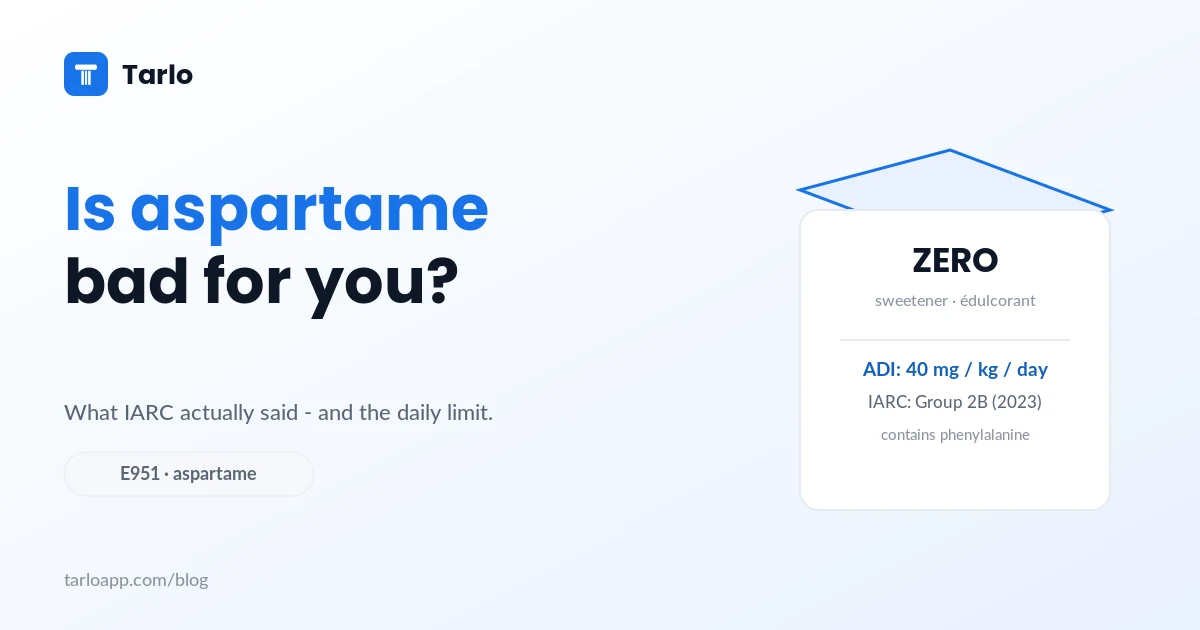
- JECFA (the WHO/FAO committee that assesses risk — actual likelihood at actual intakes) reviewed the same evidence and reaffirmed the Acceptable Daily Intake of 40 mg per kilogram of body weight per day, concluding there was no convincing reason to change it.
So the accurate one-sentence summary: one agency flagged that the question deserves more research; the agency responsible for intake limits looked at the data and left the limit exactly where it was. Headlines that stopped at “possible carcinogen” told half the story.
What the daily limit means in real products
The ADI of 40 mg/kg/day translates, for a 70 kg adult, to 2,800 mg of aspartame per day. A can of diet soda contains very roughly 200 mg. That’s in the neighbourhood of 9–14 cans per day, every day, for life before reaching the ADI — and the ADI itself already has a built-in safety margin of about 100× below levels of concern in studies. For children the per-kg math means fewer cans, but the margin remains large at normal consumption.
None of that obliges anyone to consume it. It just means the honest framing is “regulators consider it acceptable at real-world intakes; one agency wants more research” — not “confirmed carcinogen” and not “proven perfectly safe” either.
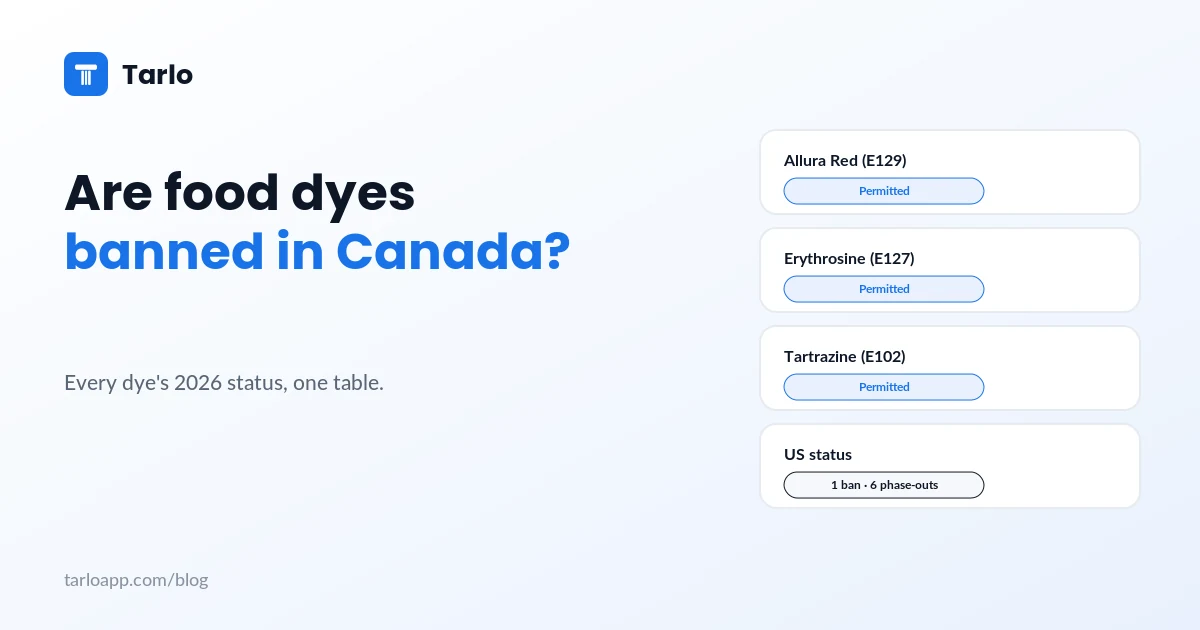
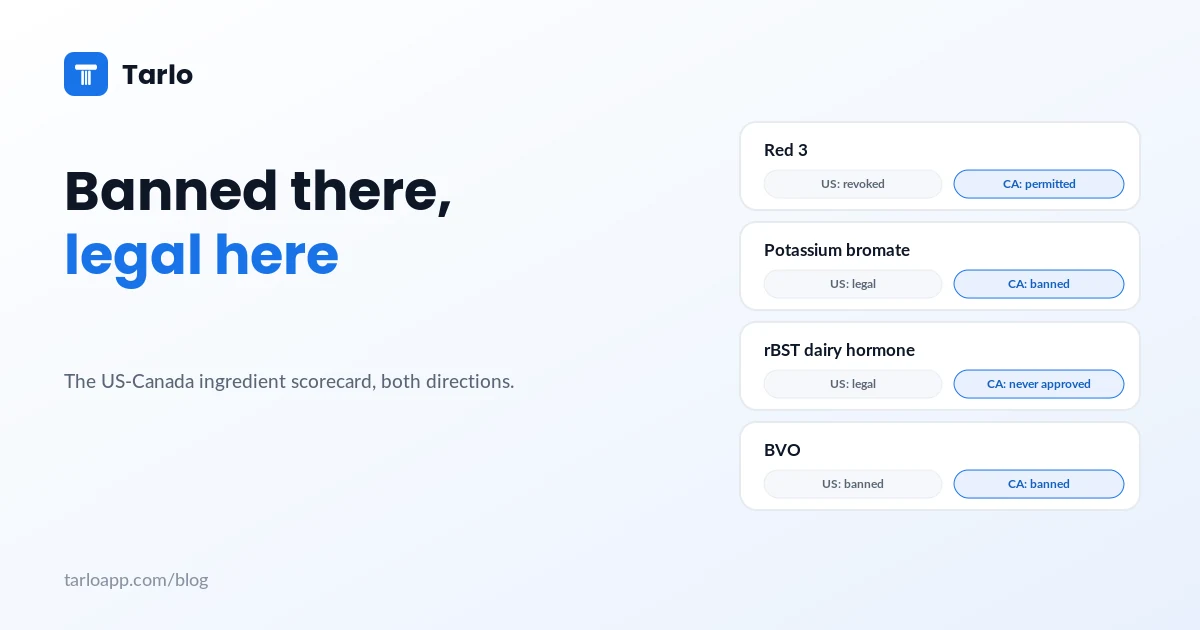
Is it banned anywhere?
No — despite recurring rumours, no major regulator bans aspartame; the full status answer is here.
What Health Canada says
Health Canada permits aspartame, sets the same 40 mg/kg ADI, and reviewed its position after the 2023 IARC/JECFA announcements without changing it. Canada also imposes a labelling requirement the US doesn’t have in the same form: see below.
The phenylalanine warning
Products containing aspartame in Canada must carry the statement that they contain phenylalanine. This exists for one specific group: people with phenylketonuria (PKU), a rare inherited condition (screened at birth in Canada) in which the body can’t properly metabolize phenylalanine. For them, aspartame is genuinely off-limits. For everyone else, the warning isn’t a general danger signal — it’s targeted information for a known population.
The rest of the sweetener family
People avoiding aspartame usually want the whole family flagged, because manufacturers substitute freely between them:
| Sweetener | Label name (EN/FR) | Code |
|---|---|---|
| Aspartame | aspartame | E951 |
| Sucralose | sucralose | E955 |
| Acesulfame potassium | acesulfame-potassium / acésulfame-potassium | E950 |
| Saccharin | saccharin / saccharine | E954 |
| Steviol glycosides | stevia extract / glycosides de stéviol | E960 |
| Sugar alcohols | sorbitol, maltitol, erythritol… | various |
A product reformulated from aspartame to sucralose still fails a “no artificial sweeteners” preference — one more case where memorizing brands loses to checking the label each time.
How to avoid it automatically
In Tarlo, switch on the artificial sweeteners rule once. Every scan checks the pre-parsed additive codes and the ingredient text — English and French — for aspartame and its relatives, and answers meets / doesn’t meet your rules with the trigger named. Failures come with same-shelf alternatives and real shopper prices. The full method is documented in how Tarlo turns a barcode into a verdict.
Frequently asked questions
Did the WHO say aspartame causes cancer?
No. IARC said the evidence was limited and placed it in its “possibly” category (Group 2B), a hazard flag meaning “worth more research.” JECFA, the intake-limit body, kept the acceptable daily intake unchanged. Those two statements together are the WHO position.
Is aspartame banned anywhere?
No major regulator has banned it. Canada, the US, the EU, Australia/NZ and JECFA all permit it with similar intake limits.
Are “naturally sweetened” products the answer?
Stevia and monk fruit are options if your rule is specifically artificial sweeteners. Note they’re still intense sweeteners in processed products — whether they fit is up to the rule you’re actually enforcing.
Why does my “zero sugar” drink pass the sugar rule but fail the sweetener rule?
Because those are genuinely different questions: it contains no sugars (passes a high-in-sugars threshold) but is sweetened artificially (fails a no-sweeteners preference). Tarlo evaluates each rule separately and shows you exactly which one triggered.
Sources
Tarlo reflects the rules you turn on and is for general information only — it is not medical or dietary advice. Regulatory details are Canadian and current as of the date above; always verify the product's physical label.